
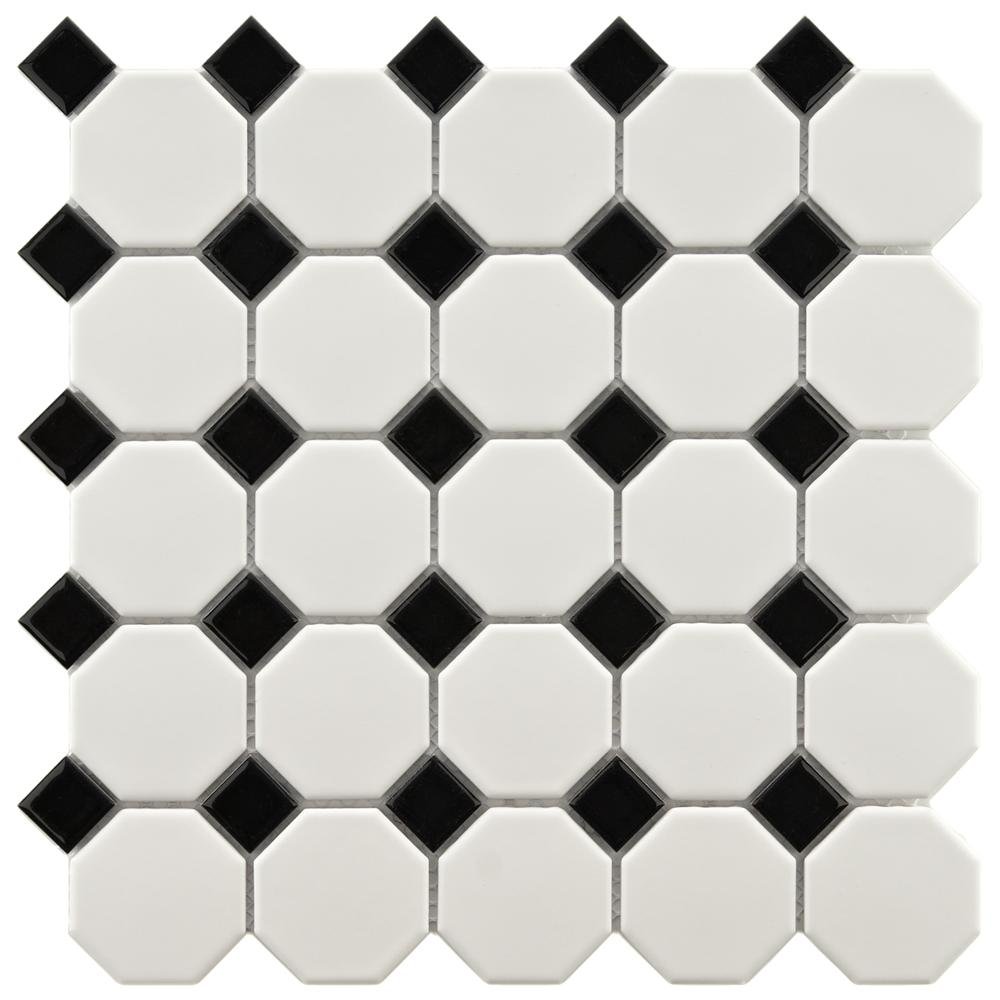
Continuing on the topic of deployable structures, today I am focusing on ‘space filling geometry’ or 3D tessellations. This refers to any geometric arrangement which can be replicated to complete fill a volume. Cubes stacked on top of each other would qualify. A simple way of creating this type of geometry is to work out a 2D tessellation and extrude out. In order for the resultant geometry to fully collapse (completely flattened or upright and packed in) all the sides of the shapes need to be the same length. In the example below the tessellation is made of squares and octagons, with each edge being equal in length. Transferring this geometry requires arranging two joints at every vertex, and a scissor connection for each edge.
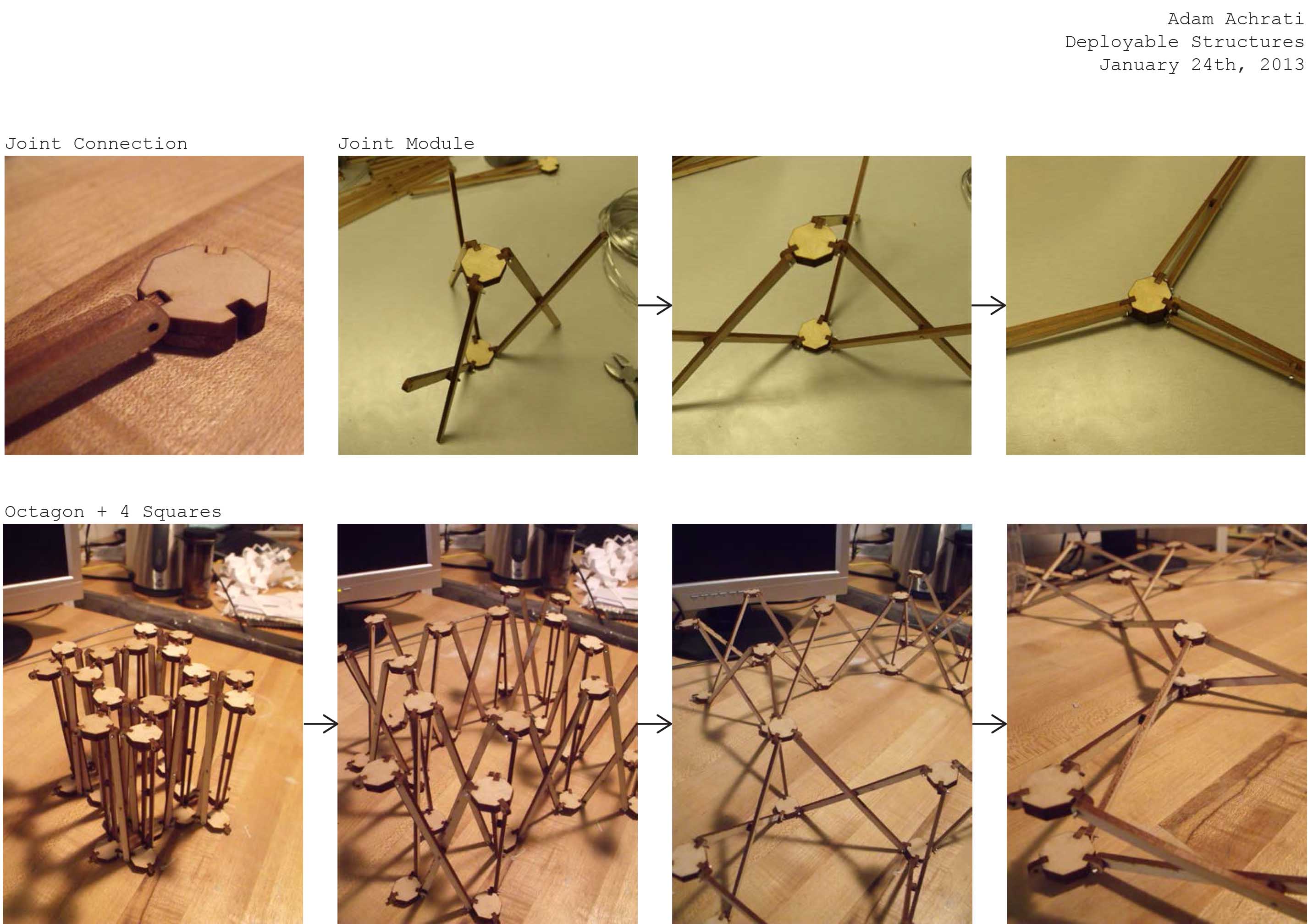
One way to elaborate this pattern would be to replicate it, essentially stacking this same arrangement on top of itself. Another possibility would be to turn octagon and square into truncated cube and octahedron. This next project was a collaboration with Steve Kocher.
![space filling geometry [Converted]](https://adamachrati.com/wp-content/uploads/2014/02/space-filling-geometry-converted.jpg)
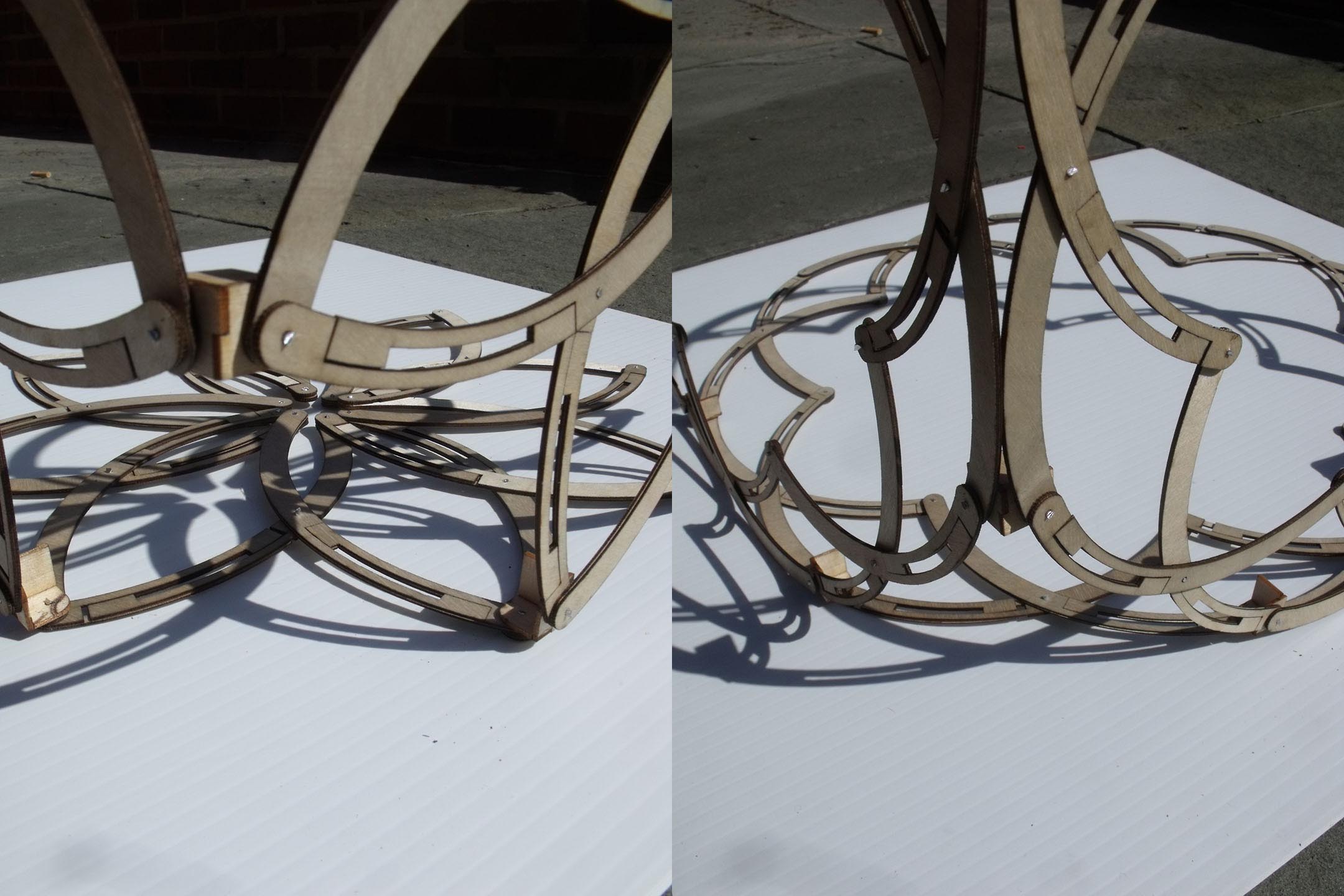
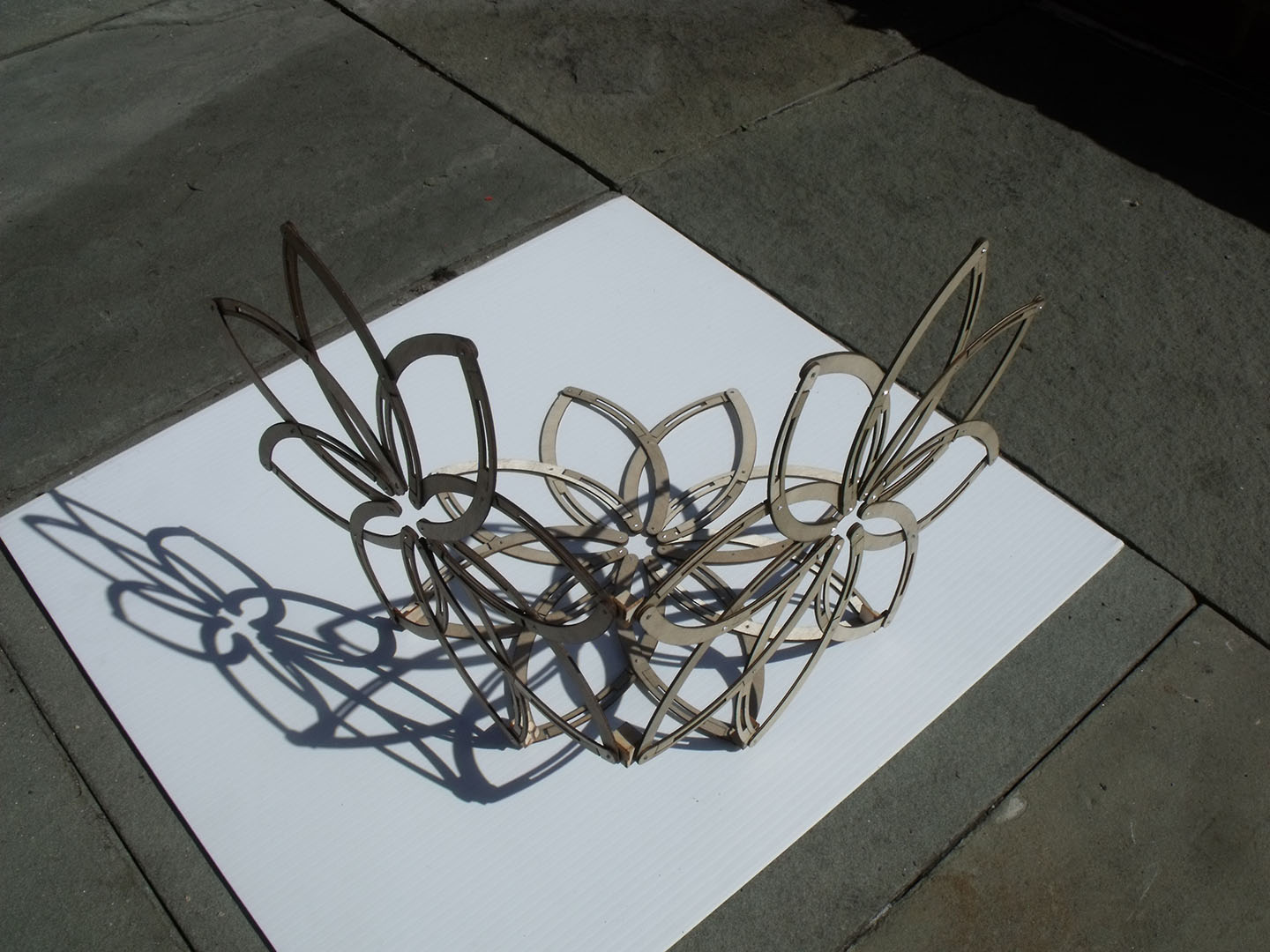
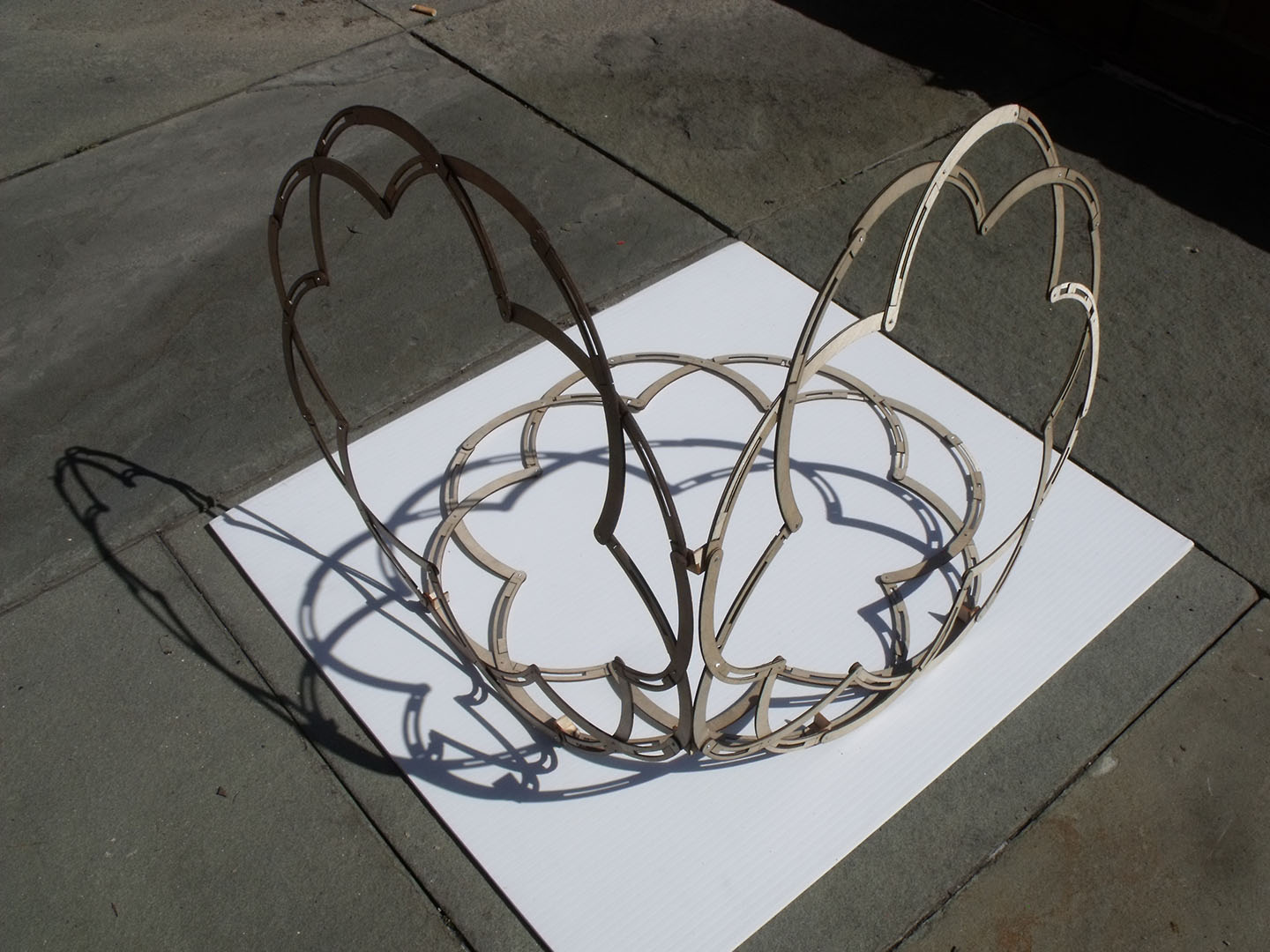
This last project was only partially complete due to dissatisfaction with the technique of using the scissor joint along the face of the volumes. These faces change dramatically, and offer some interesting floral/gothic language. In the end, however, there was not enough expansion between ‘closed’ and ‘open’ positions. Tomorrow Steve and I take a different approach to the problem of space filling deployable structures.
 Adam Achrati
Leave a comment